
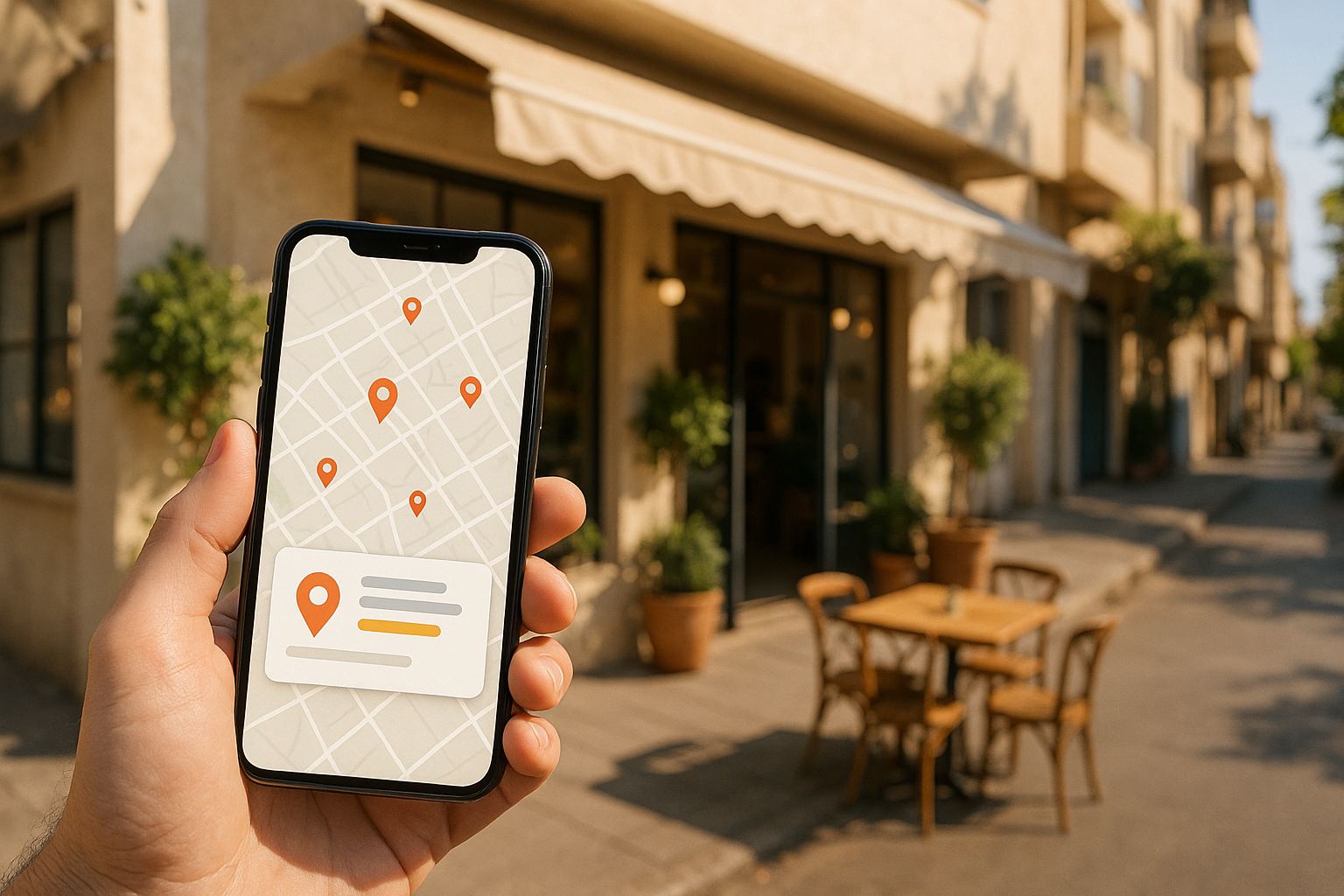
Local SEO is a process that brings customers to your business from the specific geographic area where you operate, by achieving high rankings on Google and Maps for local searches like “bakery in Ra'anana” or “plumber in Herzliya”. According to Google, about 46% of all searches on the engine include local intent, meaning a business that doesn't appear in the top results for these searches misses out on half its market. Building this presence begins with SGO's SEO services, and here we break it down into seven actionable steps you can start implementing this week.
Table of contents
- Table of contents
- What is Local SEO and who needs it
- Google Business Profile: The foundation
- Google reviews as a ranking factor
- Local citations and NAP consistency
- City-specific keywords and content
- Technical local signals, Schema, and maps
- Comparison table: Local SEO vs. National SEO
- Common local SEO mistakes
- Frequently asked questions
In short: Local SEO is built on three pillars: a verified Google Business Profile, authentic customer reviews, and local citations with consistent business details. A business that optimizes these three and adds city-specific content will rank for searches that lead to calls and inquiries, not just browsing.
Table of contents
1. What is Local SEO and who needs it.
2. Google Business Profile: the foundation.
3. Google reviews as a ranking factor.
4. Local citations and business info consistency.
5. City-specific keywords and content.
6. Technical location signals, schema, and maps.
7. Common mistakes and FAQs.
What is local SEO and why it is critical for your business
Local SEO is the optimization process designed to rank a business for geographically relevant searches, reaching an audience physically located within its service area. While national SEO competes for broad terms like “lawyer”, local SEO targets phrases like “lawyer in Ra'anana”, where the competition is far more open and conversion rates are significantly higher.
What is the difference between local SEO and general SEO?
In national SEO, Google mainly weighs domain authority and links. In Local SEO, three more factors enter the equation: relevance, distance, and prominence. This means how well the business matches the search, how close it is to the user, and how well-known it is online. A small business can outrank a large brand with a well-maintained profile and good reviews, even without a massive budget.
Who needs local SEO?
Every business serving a specific geographic area benefits from this, from hair salons and dental clinics to mechanics, accounting firms, and service pros. At SGO, we see time and again that these businesses generate most of their leads from local search rather than expensive national campaigns.
Google Business Profile: the foundation of everything
A verified and complete Google Business Profile is the first and most impactful step in local SEO. It puts you on the maps, in the Local Pack above regular search results, and in the Knowledge Panel when someone searches for your brand.
How to set up and verify a profile?
Open a free account through Google's business tool, enter your name, address and phone number, and verify ownership, usually by a postcard with a code, by phone or by video. Verification is mandatory: an unverified profile almost never ranks. We recommend reading the official guidelines in the Google Business Profile help center before you start.
Which fields actually affect ranking?
An accurate primary category is the most important field, followed by a description rich in local keywords, updated business hours, service areas, and real photos of the business. According to Google, profiles with photos and a full description get significantly more direction requests and calls than empty profiles. Update your profile regularly; Google rewards activity.
Google reviews as a ranking factor
Reviews are one of the strongest signals for both local ranking and convincing users to click and call. Consumer research shows that most people read reviews before choosing a local business, and a high volume of reviews with a high average rating pushes a business up the search results.
How to ask for reviews without sounding desperate
The most effective way is to ask satisfied customers upon completion of service and send them a direct review link via message. A personal, specific request is better than offering incentives for reviews, which is against Google policy and could harm your profile. A consistent pace of one or two reviews a week is better than a one-time surge.
How to respond to negative reviews?
Respond politely, take responsibility where necessary, and offer to resolve the issue privately. A professional response to a negative review builds credibility with future customers and is often more valuable than the positive review itself. Google also favors profiles where the business owner is active and responsive.
Local citations and business detail consistency
A local citation is any mention of your business name, address, and phone number on an external website. Google uses these mentions to verify that your business is legitimate and established. The more consistently these details appear across various sites, the more Google trusts your business.
What is NAP and why is consistency critical?
NAP stands for Name, Address, and Phone number. The simple rule is to write them exactly the same way everywhere, including street abbreviations and phone prefixes. Inconsistency, like using “St.” in one place and “Street” in another, confuses Google and weakens your local signal.
Where to get citations in Israel
Quality sources include Israeli business directories, local listings, relevant professional associations, and business social networks. It is important to prioritize credible sites over quantity, completing major profiles first before moving on to smaller ones.
Keywords and content by city
Dedicated content for each city or service area allows a business to rank for dozens of local searches instead of just one. A page that speaks specifically to services in that city matches search intent perfectly, and Google prefers it over a generic page.
How to build city-specific pages without keyword cannibalization
Each city page needs a unique angle and content, including local data, neighborhoods, and case studies from that specific area, rather than duplicating the same text and swapping city names. This is how we handle pages like SEO in Herzliya, SEO in Ra'anana and SEO in Kfar Saba. Each page stands alone and links back to the SGO SEO framework. Those looking to dive deeper into national rankings will find value in our Google ranking guide.
Technical local signals, Schema, and maps
Beyond content, there are technical signals that help Google accurately understand a business's location and niche. The most prominent is LocalBusiness structured data, which provides Google with the name, address, hours, and industry in a format it can read directly.
LocalBusiness Schema and speed
Implementing LocalBusiness Schema according to official Google documentation strengthens your business's presence and often triggers rich results. It is equally important that your site loads fast on mobile, as most local searches happen on phones, and slow speeds hurt both rankings and conversions. Embedding a map on your contact page adds another local signal. For a solid foundation, business owners can start with website design for small businesses.
Comparison table: Local SEO vs. National SEO
| Parameter | Local SEO | National SEO |
|---|---|---|
| Target audience | Users from a specific area | National |
| Competition level | Medium, more open | Very high |
| Core signal | Business profile and reviews | Links and authority |
| Conversion rate | High, immediate intent | Variable |
| Time to results | Relatively fast | Longer |
Common Local SEO mistakes
The most common mistake is opening a business profile and neglecting it without updates, reviews, or photos. Other major errors include inconsistent business details across sites, choosing the wrong primary category, duplicate city pages with the same text, and ignoring mobile speed. A business that fixes these five will see a difference in weeks, not months.
Frequently asked questions
How long does it take to see results from local SEO?
A verified and optimized Google Business Profile can appear in local results within a few weeks. Stable ranking improvements for competitive local keywords usually take three to six months, depending on local competition and review frequency.
Do you need a website for local SEO?
A Google Business Profile alone creates a presence, but a website builds trust, allows for dedicated city pages, and improves rankings over time. The combination of an optimized profile and a fast website with local content delivers the best results.
How many Google reviews do you need?
There is no magic number, but you should aim to exceed your direct local competitors in both quantity and average rating. More important than the total count is a steady pace of authentic reviews over time, which Google recognizes as natural activity.
What is NAP and why does it matter?
NAP stands for Name, Address, and Phone number. Full consistency of these details across every site where they appear signals to Google that the business is reliable and established, boosting local SEO. Inconsistency weakens the signal and can prevent you from appearing on maps.
Does Local SEO work for businesses serving multiple cities?
Absolutely, and that is why you should build dedicated pages for each city or service area. Each page gets unique content tailored to local search, all linking back to the main service page so the business ranks across multiple markets simultaneously.
The Concept: Local SEO is a branch of search engine optimization focusing on searches with geographic intent. It relies on a Google Business Profile, reviews, local citations, and structured data, measuring success through local leads and calls rather than just general traffic.
Want to dominate the local results in your area?
The SGO team builds your complete local SEO strategy, from Google Business Profile and reviews to city pages and conversion-focused content.
Planning a new site? SGO business website design and development or ecommerce stores offer expert design, build, and results.
Want a city-specific example? Our guide on SEO in Petah Tikva shows how a local business wins on Google.
Want more customers from your site? SGO specializes in SEO that drives traffic and leads.