
📑 Table of contents
- Why do businesses need website API integration?
- What is an API and why the buzz?
- How it works in practice?
- How to set up a website API, step by step
- The business benefits of system integration
- Integrating APIs into the development process
- Connecting design and smart development
- The difference between a regular site and an API-powered site
- Practical examples from the field
- Integration with CRM and data management systems
- Maintenance and monitoring of existing integrations
- Data security and protection
- The impact of API on Google SEO
- Integration with marketing and SEO systems
- Future trends in the API world
- How to choose the right partner for an integration project
- Summary
- Website API integration FAQ
Want to learn more? Read about SGO app development for businesses or custom software development.
Why do businesses need website APIs?
A website API is a permanent connection between the site and other business systems, such as CRM, payments, inventory, or mailing lists, so that information moves between them automatically and in real-time. A lead entered in a form goes directly to the CRM, an order in the ecommerce site updates the inventory and accounting, and no one has to type the same data twice. Setting up a website API pays off when you have more than one system holding the same information, or when manual entry already causes errors and delays.
💡 SGO is an Israeli website design and SEO company. We connect WordPress sites and WooCommerce stores to CRM, payments, mailing, and inventory systems, testing every connection in a staging environment before it goes live.
What is an API and why the buzz?
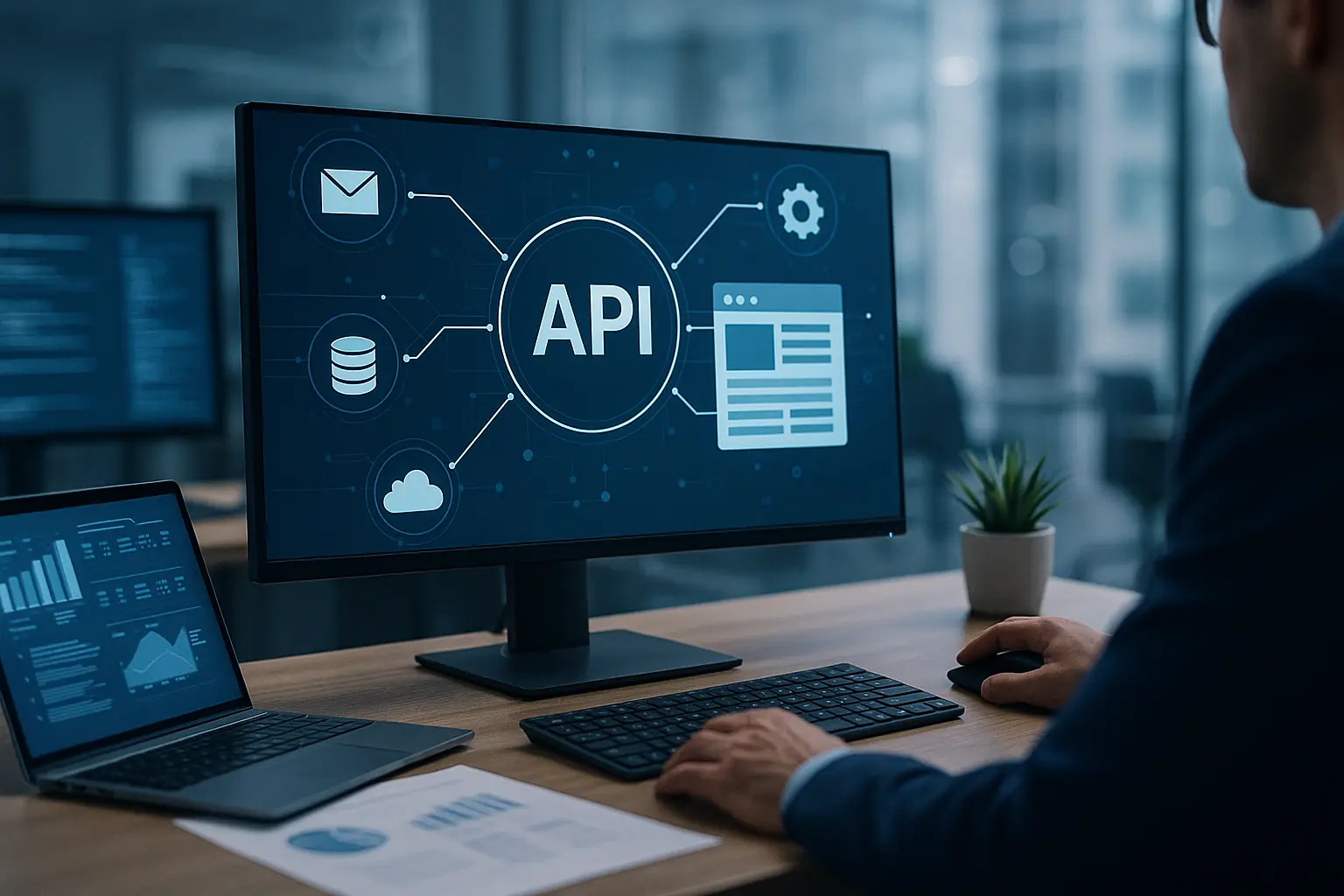
An API is a communication interface that allows software systems to “talk” to each other. It transfers real-time data between your website and various platforms. For example, connecting your site to an email marketing system automatically updates your mailing lists, eliminating manual data entry or human error. API is the core of modern digital development, enabling smart automation and precise data management. SGO develops custom API interfaces tailored to business needs, creating a smart website that stays updated and runs smoothly.
How does it work in practice?
Modern website design incorporates API connections right from the characterization stage. Website design is the foundation that enables efficient and secure API connections. The site is built to communicate with various external systems. Data is transferred in real-time between the site and the target system. SGO ensures every connection operates stably and securely. This creates a single digital communication system that runs smoothly. Connections are rigorously tested at every stage of development to ensure stability, speed, and high performance. This creates a site that functions as a smart and accurate management system.
How to set up a website API, step by step?
Website API integration follows four set stages, starting before a single line of code is written. This ensures a connection that stays stable long after launch.
Step 1: Data mapping
You define which fields are transferred, in which direction, and at what frequency. A lead from the site goes immediately to the CRM, while an inventory update can run once an hour. This is also where you decide which system is the source of truth when two systems hold the same data.
Phase 2: Choosing the connection method
Most systems offer a REST API, where the website sends a request and receives an answer. When an immediate response to an event is needed, like a confirmed payment, we use a Webhook. The remote system notifies the site the moment something happens, without the site having to ask repeatedly.
Phase 3: Testing environment
We build and test the integration on a staging copy of the website and a sandbox account from the provider. This allows us to send hundreds of requests and see what happens when data is incorrect without affecting real customers.
Phase 4: Deployment, logging, and monitoring
After going live, every request is logged and recurring errors trigger an alert. The response codes returned by the remote system are the primary diagnostic tool, and the MDN documentation lists them all. These are the most common in website integrations:
| Code | Name | What it means | What to do |
|---|---|---|---|
| 200 | OK | The request was successful and data returned | No action needed |
| 201 | Created | A new record was created, such as a CRM lead | Ensuring the record is created only once |
| 400 | Bad Request | Data sent is invalid | Check required fields and format |
| 401 | Unauthorized | The access key is missing or incorrect | Renew the key or the authorization |
| 404 | Not Found | The address or record does not exist | Check the endpoint and the ID |
| 429 | Too Many Requests | You have exceeded the provider's request limit | Slow down and try again later |
| 500 | Internal Server Error | Remote system error | Retry and contact the provider if the error persists |
Ecommerce integration: What should you connect?
In an online store, common connections include payments, inventory, shipping, and invoicing. WooCommerce comes with a documented REST API that allows reading and updating products, orders, and customers, so most connections don't require building a system from scratch. When an external system does not offer an API, it can be connected via scheduled file imports, but updates will not be in real-time. For more on complex integrations, read about app development and API integration for businesses.
Business benefits of system integration
When business data is centralized in one place, management becomes simpler. A CRM updates automatically with every new lead from the site. An accounting system receives payment data in real time. This saves work hours and prevents costly human errors. Additionally, you can provide customers with a fast and accurate service experience. Employees focus on performance rather than redundant technical operations. API allows every business to operate with precision and speed at every stage, creating a foundation for efficient and controlled business growth.
Integrating APIs into the development process
Successful API integrations begin at the planning stage. SGO website design services include precise planning of every external connection to prevent future malfunctions and maintain long term stability. During the discovery phase, our team examines all systems relevant to the integration and then verifies full compatibility with the development process. This approach reduces costs and increases future flexibility, giving the website a modern infrastructure ready for change. This is a significant advantage for a business that wants to grow with current technology.
Connecting design and smart development
Quality design is just as important as technical development. SGO combines advanced UX/UI design with functional development. Every site component is optimized for efficient use on desktop and mobile. The experience remains uniform and convenient across all devices. API integrates naturally into the design without visual clutter, keeping the site fast and easy to use. Customers feel comfortable with every interaction on the site. The combination of design and development delivers a perfect user experience.
What is the difference between a standard site and one with an API?
A standard website only displays information and therefore limits the business. A website with API triggers processes in real time and improves efficiency. The site updates inventory with a click and sends data directly to the system. This allows the business to manage data accurately and quickly. On connected sites, every change appears immediately and is recorded in every system. API helps in making data-driven decisions at a fast pace, saving time and preventing unnecessary operational errors. This makes the gap between a business website and an active business system very clear.
Practical real-world examples
SGO clients already benefit from connected and secure websites. For example, an ecommerce site that syncs inventory and prices with an ERP system, or a corporate website connected to a CRM for lead management. A course registration system updates students after they sign up while managers receive real-time updates in the management system. All these are powered by precise and stable API interfaces. SGO tailors the solution to every business based on its needs, resulting in a website that works smarter, safer, and more efficiently.
Integration with CRM and data management systems
Connecting the site to a CRM system allows for precise lead tracking. Customer information is automatically transferred to the management system, saving valuable time and preventing duplicate data entry. Additionally, you can perform segmentation and tailor offers to customers. The systems work together and provide real-time data. SGO integrates these connections as a built-in part of the website, maintaining high security and stability. This creates a dynamic site that truly manages customers intelligently.
Maintenance and monitoring of existing connections
Even after the launch, it is important to maintain and test the connections. SGO provides professional website maintenance services. Maintenance includes security updates, system checks, and regular backups. Continuous monitoring ensures proper operation even under heavy load. Clients enjoy peace of mind and consistent performance. Proper maintenance extends the life of the website and prevents malfunctions. SGO ensures every system works smoothly so the business can focus on growth instead of maintenance.
Data security and protection
Information security is a vital component of any connected website. SGO uses advanced encryption protocols and secure SSL certificates. Data access is performed only through authorized interfaces. All information is stored on secure servers and encrypted to prevent leaks of sensitive information. Security is continuously tested and maintained. SGO ensures a high level of protection for its clients, maintaining user trust and preventing future issues.
The impact of APIs on SEO
An API also contributes to the organic SEO of the website on Google. Websites with an API run fast and provide accurate data. Site speed directly impacts Google rankings. SGO integrates API connections as part of our optimization services. This keeps the site updated in real time and relevant to users. Additionally, the user experience improves significantly, rankings rise, and the site is exposed to more potential customers. This is the way to combine technology and smart digital marketing.
Integration with marketing and SEO systems
When systems are connected, marketing becomes more accurate and efficient. API integration allows sending customer data directly to SEO and marketing systems and measuring results in real-time. This helps you understand which campaigns drive results and make immediate improvements. SGO builds marketing websites connected to automation tools, so the business sees what works and improves what doesn't. This combination creates a closed and efficient system for smart marketing. API strengthens the marketing infrastructure and delivers real results.
Future trends in the world of API
The API field is evolving rapidly, bringing new capabilities. In the world of automation and AI, tools are becoming smarter. In the near future, websites will connect to smart analysis systems in real-time, allowing businesses to receive up-to-date data and make more informed decisions. SGO already follows current standards and smart processes, continuously implementing new technologies. This ensures every website built is ready for the digital future. An API is no longer an option, it is the next step for every business.
How to choose the right partner for an integration project
The success of an integration project starts with choosing the right company. It is important to select a partner with both technical experience and business understanding. SGO offers a combination of technological knowledge and strategic thinking. The team plans, designs, and develops with full customization, ensuring every website is built correctly for the business needs. The work is carried out with full transparency and personal support. Clients enjoy a structured process and measurable results, leading to real and stable business success.
Summary
Building websites with external integration transforms the business and forms the basis for a strong digital infrastructure. The website becomes a powerful management, sales, and marketing tool. SGO leads the industry in developing smart and secure connections. The service includes planning, design, development, and professional maintenance. This results in a website ready for the digital future and real business growth. It is time to move to a website that works for you. For more information and a quote, contact SGO. The future of your business starts with a truly connected website.
To learn more about modern web development standards, visit the Google web.dev guide.
Website API FAQs
What is a website API?
How long does website API integration take?
What is the difference between REST API and Webhook?
Does API integration affect website speed?
How do you know an API connection has stopped working?
Want a website that delivers results? Talk to us
For a custom quote, leave your details and we will get back to you.
Get a quoteFor more on this topic, we recommend reading our guide on app development and API integration.
Last updated: September 2026
Want more customers from your site? SGO specializes in organic SEO that drives traffic and leads.